- 06-01-2026
- 0
How to Choose the Best Pruning Shears for Your Garden?
Choosing the Best Pruning Shears for Your Garden
A good pair of pruning shears is an essential tool for any gardener. You will use pruning shears for things like trimming flowers and shaping shrubs. Not all pruning shears are the same. Some are better than others. If you choose the right pair of pruning shears, gardening can become easier and more enjoyable.
This guide will help you find a pair of pruning shears that suits your hands and the work you do in your garden. You want every cut to feel smooth and easy.
Why the Right Pruning Shears Matter
If you invest in a good pair of pruning shears, it will be beneficial for both your garden and yourself. The main purpose of pruning is to help keep your plants healthy. A clean cut is very important. A sharp and well-made pruning tool will cut branches without damaging the plant. This helps the plant heal more quickly. It reduces the risk of pests and diseases.
Gardening should be enjoyable, not painful. A pruning tool that fits your hand and is comfortable to use will make your work easier. You will not get tired as quickly. Ergonomic features such as comfortable handles and rotating handles are designed to make your work safer and more efficient.
A high-quality pruning tool is an investment. It will last for a long time. You can replace parts. Continue using it. This is better for the environment. It will always be a reliable tool for you.
Types of Pruning Shears
There are three types of pruning shears. Each type is suitable for different jobs.
Bypass Pruning Shears
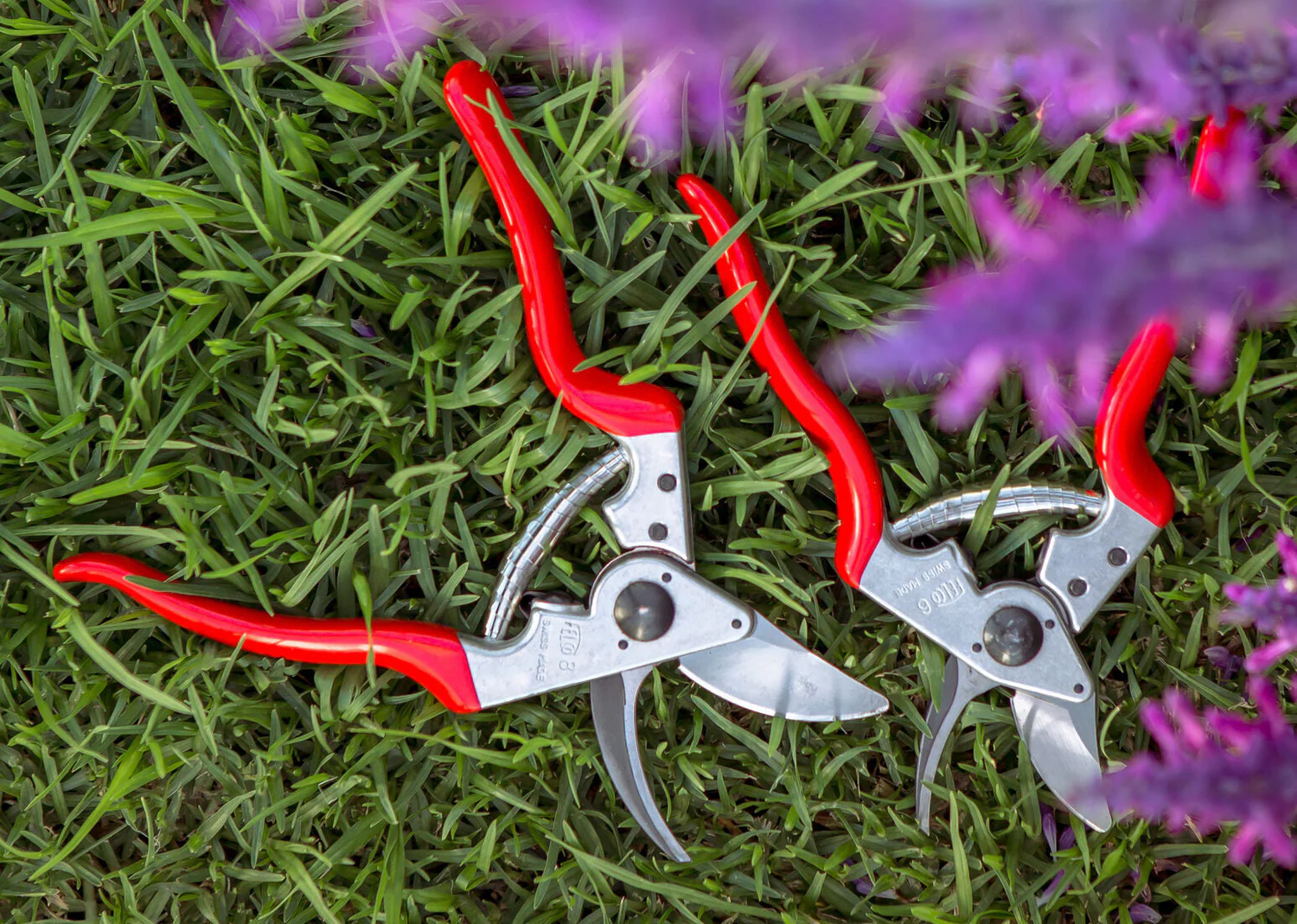
Bypass pruning shears are the most common type. They work like scissors. They have two blades that make clean and precise cuts. This type is ideal for cutting live wood. Bypass pruning shears are the preferred choice for most gardening tasks.
Anvil Pruners
Anvil pruning shears have one blade that cuts against a flat surface. This type is powerful and is good for cutting dry wood. However, it can damage living plants. Therefore, anvil pruners such as FELCO 31 are best for cleaning up dry wood.
Electric-Assisted Pruning Shears
Manual pruning shears are also among the most popular choices for gardeners. However, electric-powered options are also available. These are good for people who need to do a lot of pruning. They make cutting easier and reduce hand fatigue.
What to Consider When Buying Pruning Shears
There are several things you should consider when buying pruning shears.
Hand fit. Comfort. The pruning tool should feel like an extension of your hand.
Handle type. Look for handles that fit your hand and are comfortable to use.
Cutting capacity. Check how thick a branch the pruning tool can cut.
Build quality. Look for pruning tools made from materials such as hardened steel and forged aluminum.
How to Choose the Right Size Pruning Shears
Choosing the right size pruning shears is important. It starts with your hand size. A properly fitting tool is easier to use and helps prevent fatigue.
To determine your hand size, measure the distance from the tip of your middle finger to the base of your palm.
Use this measurement to select the size of your pruning shears.
Small: up to 17.5 cm
Medium: more than 17.5 cm up to 20 cm
Large: more than 20 cm
Why Size Matters
A pruning tool that is too large or too small is not ideal. It can cause hand pain. It makes cutting more difficult. The correct size allows you to hold the pruner securely and make cuts with less effort. FELCO pruning shears are designed in various sizes to fit small, medium, and large hands, ensuring comfort and precision for every gardener.
Recommended Models
There are several excellent pruning shear models. Here are a few recommendations.
Best all-rounder: FELCO 2
Best for small right hands: FELCO 6
Best compact model: FELCO 14
How to Test Pruning Tools Before Buying
When buying pruning shears, test them first.
Hold the tool in your hand. Check whether it feels balanced.
Check the weight. Make sure it feels comfortable.
Close the handles to check whether the range of motion suits your hand size.
Inspect the blades. Make sure they are perfectly aligned and slide smoothly over one another.
If possible, test the pruning shears on a branch or dowel to feel the cutting action. It should be smooth and require minimal effort.