- 09-21-2026
- 0
How to choose the right tools for hedge trimming and use them properly
We all love hedges when they are perfectly trimmed and neatly shaped. However, when they start growing out of control, maintaining them can quickly become a challenging task. Whether you have recently purchased a property with an existing hedge or you are preparing to trim your hedge for the first time, choosing the right tools and understanding how to use them properly is essential.
In this article, we will cover everything you need to know about hedge trimming tools and their proper use.
What Is the Difference Between a Hedge Trimmer and a Hedge Cutter?
When you start looking for gardening and landscaping equipment, the wide range of available tools can be overwhelming. There are many different products designed for different types of hedge maintenance.
You may come across both hedge trimmers and hedge cutters and wonder whether they perform the same job.
Although they are similar, there are some important differences. Depending on the size, condition and type of your hedge, you may need one of these tools or even both.
Hedge Trimmers
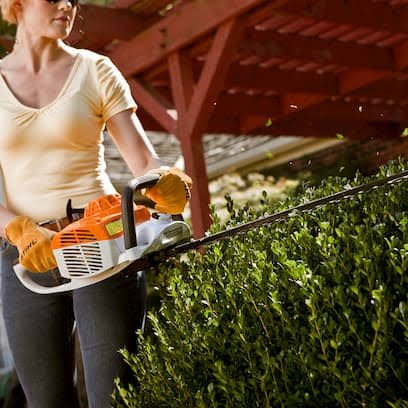
Hedge trimmers are ideal for light and precise hedge maintenance. They can be used to trim smaller branches, maintain the shape of your hedge and give it a neat finish after the main cutting work has been completed.
If your hedge is regularly maintained and does not contain many thick, woody branches, a hedge trimmer can be an excellent choice.
Hedge Cutters
Hedge cutters are designed for more demanding cutting jobs. They are particularly useful when a hedge has been neglected, has become overgrown or contains thick and woody branches.
These tools are generally more powerful and are designed to handle heavier cutting tasks and larger branches.
Choosing the right tool can make a significant difference to the final result. If you are unsure which equipment is suitable for your hedge, consulting a professional gardening equipment specialist can help you make the right choice.
How to Trim Hedges by Hand
You may think that trimming a hedge is similar to pruning shrubs or trees, but hedge maintenance requires a slightly different approach. Understanding the growth pattern of your plants is important if you want to create an attractive shape while keeping the hedge healthy.
A healthy hedge should remain dense from the bottom to the top. For this reason, the sides should generally be trimmed with a slight outward angle, making the top narrower than the base.
This shape allows the lower branches to receive enough sunlight, helping the hedge maintain its density and encouraging healthy growth.
Use Guide Lines
If you want to achieve a straight and uniform hedge, guide lines can be extremely useful.
Attach string to wooden stakes and place them at both ends of the hedge. Stretch the string along the desired cutting line and use it as a visual guide while trimming.
This simple technique can help prevent uneven cutting and make it easier to achieve a professional-looking result.
Start from the Top
Begin by trimming the top of the hedge, aiming to create an even and level surface along the guide line.
Once the top is complete, move on to the sides. Trim them evenly while following the guide strings.
If you notice thin or uneven areas, proper trimming can encourage new growth and gradually help fill in these sections.
Finally, trim the ends of the hedge. For a traditional and neat appearance, you can keep the ends square. Alternatively, you can angle them slightly inward to create a more decorative shape.
What Tools Are Needed to Trim Hedges?
A pair of garden scissors is usually not enough for maintaining a hedge properly. Having the right equipment can make the work considerably easier and help you achieve both an attractive appearance and healthy plant growth.
For light and precise trimming, a hedge trimmer is an excellent option. For thicker branches and more demanding cutting tasks, a hedge cutter may be more appropriate.
Depending on the height and shape of your hedge, you may also need:
- A ladder or suitable working platform for tall hedges
- A measuring tape for accurate measurements
- String for creating guide lines
- Wooden stakes
- A hammer for securing the stakes
Using the right combination of tools will help you achieve a more uniform, neat and professional-looking hedge.
How Can I Make My Hedges Level?
Even if you pay close attention while trimming, it can be difficult to notice small differences in height while standing close to the hedge.
You may think everything looks perfectly straight, only to step back and notice uneven sections.
This is why using guide strings can be so helpful.
Stretch a string along the top and, if necessary, the bottom of the hedge and use it as a reference while cutting. This simple method can significantly improve the overall shape and consistency of your hedge.
What Should I Use to Trim Tall Hedges?
Many people grow hedges to create privacy, which means they can become quite tall over time. Some plants, such as pittosporum, can reach heights of up to three metres.
Trimming a hedge at this height requires extra care and appropriate equipment.
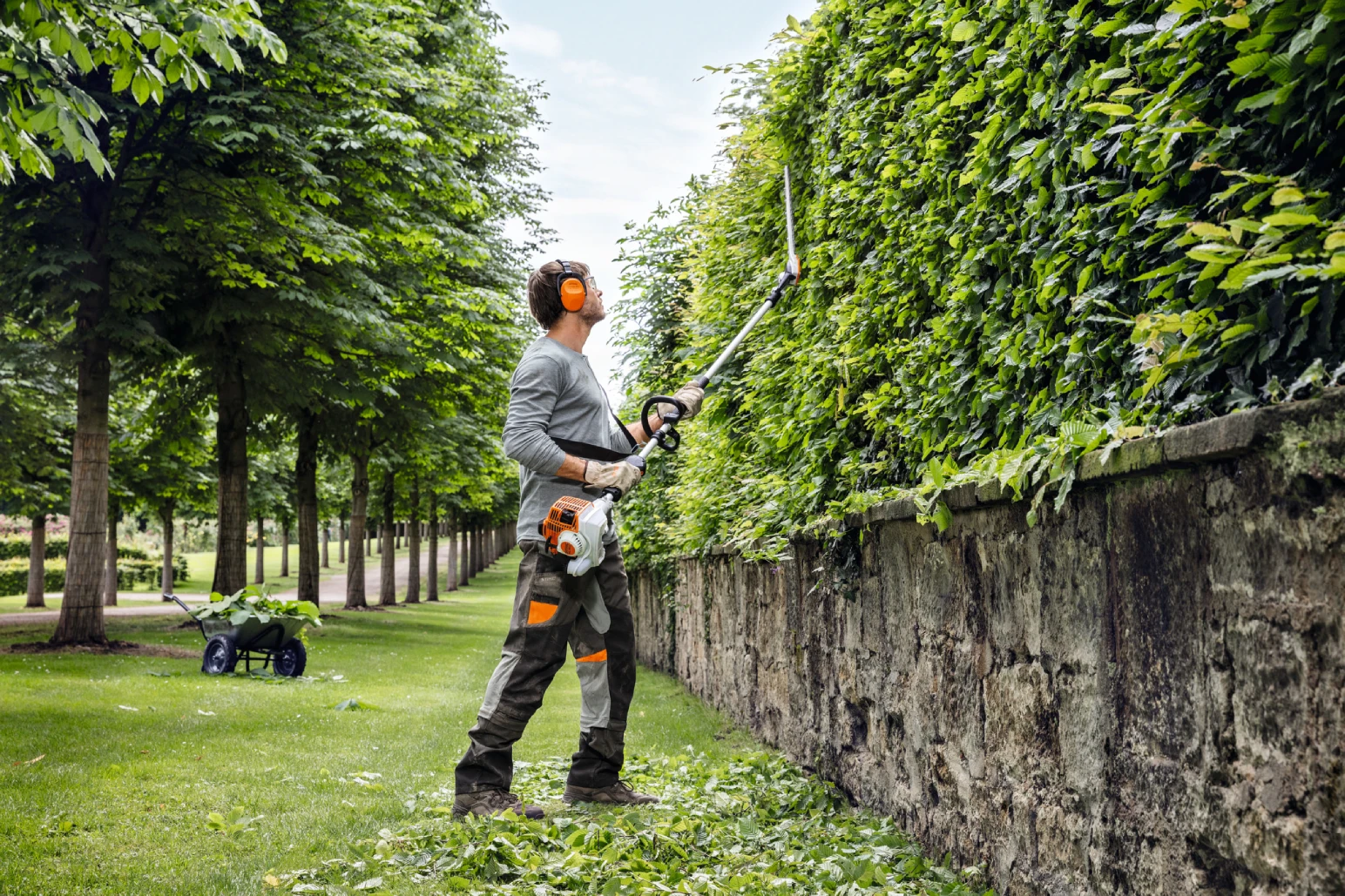
One of the most important safety rules is never to operate a standard hedge trimmer above your head. Working in this position can make it difficult to maintain your balance and may increase the risk of falling and suffering serious injuries.
For tall hedges, it is better to use a long-reach hedge trimmer or another suitable tool that allows you to reach higher sections while maintaining a safer working position.
If the hedge is particularly tall or difficult to access, consider hiring professionals to carry out the work safely and efficiently.
Conclusion
Maintaining a healthy and attractive hedge becomes much easier when you have the right tools and know how to use them correctly.
Hedge trimmers are ideal for regular and precise maintenance, while more powerful hedge cutters are better suited to thick branches and overgrown hedges. Guide strings, measuring tools and suitable access equipment can also help you achieve a straight and professional finish.
When choosing gardening equipment, consider the size and condition of your hedge, the type of plants you are working with and the specific tasks you need to perform.
High-quality equipment, combined with proper techniques and safe working practices, can help you keep your garden looking neat, healthy and well maintained.