- 11-05-2026
- 0
Low irrigation pressure: Common causes and how to identify the problem
Why Is Low Irrigation Pressure Important?
Key Takeaways
The main causes of low irrigation pressure include water leaks, clogged filters, partially closed valves, pump problems, and excessive system demand.
Monitoring pressure and water flow together makes it easier to identify the source of a problem.
Continuous monitoring helps detect intermittent issues that may go unnoticed during routine manual inspections.
If irrigation sprinklers are no longer spraying water as far as they used to, irrigation cycles are taking longer than expected, or pressure gauges show a sudden drop, the cause may be low pressure in the irrigation system.
The main challenge is that pressure problems are rarely associated with just one cause. The same symptoms can result from a water leak, a clogged filter, a partially closed valve, a pump malfunction, or changes in system demand.
To identify the source of the problem, it is not enough to look at a single pressure reading. The overall operation and performance of the irrigation system must also be considered.
Signs of Low Irrigation Pressure
In some cases, low irrigation pressure is easy to identify. Sprinklers may no longer cover the same area, drip irrigation outlets may deliver less water, or sections of a field farther from the pump may receive less water than areas nearby.
Other signs are less noticeable. Irrigation cycles may take longer than expected, crop growth may become uneven, or one section of a farm may begin operating differently from the rest of the system.
Growers may also notice that pressure gauge readings are lower than previous measurements. This is an important warning sign, but pressure readings alone do not explain the cause of the problem.
| Observed condition | Possible cause |
|---|---|
| Low pressure and unusually high water flow | Water leak or damaged irrigation pipe |
| Low pressure and reduced water flow | Clogged filter, restricted flow, partially closed valve, or pump problem |
| Normal pressure near the pump but low pressure farther along the system | Pipe blockage, water leak, or valve problem between the measurement points |
| Pressure drops only during certain irrigation cycles | Excessive system demand or an intermittent fault |
These symptoms do not provide a definitive diagnosis, but they help determine where troubleshooting should begin.
Common Causes of Low Irrigation Pressure
Several different problems can cause irrigation pressure to decrease.
Water Leaks or Damaged Irrigation Lines
A broken pipe, loose connection, damaged fitting, or leaking valve can allow water to escape before it reaches the intended irrigation area.
Large leaks are usually easy to spot. However, small leaks can remain hidden in underground pipes or areas that are not inspected regularly. Even a relatively minor leak can affect pressure and lead to significant water loss over time.
When a leak occurs, pressure may decrease while water flow increases. Monitoring both measurements together provides a clearer understanding of what is happening within the system.
Clogged Filters
Filters are designed to protect irrigation equipment from dirt and other particles. However, when a filter becomes dirty and restricts the passage of water, pressure can drop.
If pressure is normal before the filter but lower after it, the filter may need cleaning or maintenance.
Regularly checking the pressure on both sides of the filter helps identify this problem before it affects irrigation performance across the entire field.
Partially Closed Valves
A valve that appears to be open does not necessarily allow water to pass through at full capacity.
Mechanical wear, dirt, or internal damage can prevent a valve from opening completely. This creates additional resistance within the irrigation system, reduces downstream pressure, and limits the amount of water reaching the field.
Pump Performance Problems
If a pump cannot provide the pressure for which the irrigation system was designed, irrigation efficiency may decrease across the entire field.
Pump performance can deteriorate because of wear, electrical problems, suction difficulties, changes in water levels, or operation outside the pump's intended operating range.
Because pump-related issues can be complex, a qualified pump or irrigation specialist may be needed to identify the underlying cause.
Excessive System Demand
Operating too many irrigation zones, valves, or outlets at the same time can cause pressure to drop.
Irrigation systems are generally designed around a specific flow rate and pressure range. Activating additional zones or changing the operating schedule may exceed the intended capacity of the pump and pipe network.
If pressure returns to normal when fewer zones are operating, excessive system demand may be one of the causes.
Pipe Restrictions and Blockages
Mineral deposits, dirt, root intrusion, crushed pipes, and other obstructions can restrict the movement of water through an irrigation system.
These problems often develop gradually, making them difficult to detect in time. Pressure may decrease slowly over an extended period rather than dropping suddenly.
Comparing current readings with previous measurements helps identify changes that might otherwise go unnoticed.
What Should You Check First When Irrigation Pressure Drops?
When a decrease in irrigation pressure is observed, begin with components that are safe and easy to inspect. For a step-by-step inspection, you can use this low irrigation pressure checklist.
Inspect visible pipes, fittings, valves, and connections for signs of water leakage. Clean filters according to the manufacturer's instructions. Make sure the necessary valves are fully open and that more irrigation zones are not operating than the system is designed to support.
Recording pressure readings at different points in the system is also useful. If pressure is normal near the pump but lower farther along the system, there may be a pipe blockage, leak, or valve problem between those points.
If pressure and water flow data are available, compare them together. The relationship between these two measurements can help determine whether the problem may be related to a leak, restricted flow, excessive demand, or pump malfunction.
These indicators do not provide a final diagnosis, but they offer a clearer starting point for troubleshooting.
Why Might a Single Pressure Reading Not Be Enough?
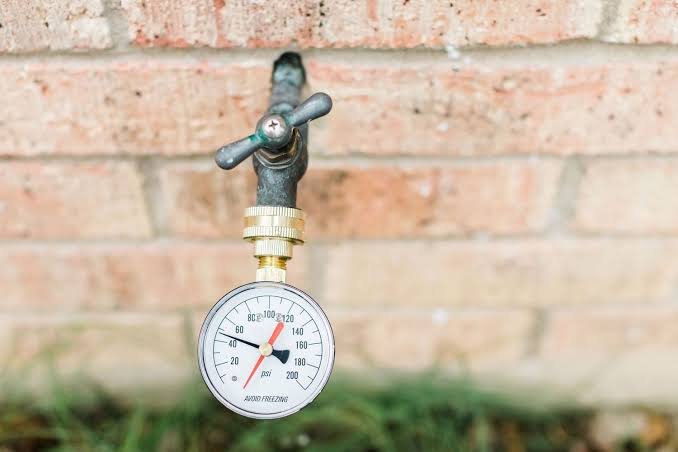
A manual pressure measurement shows how the system is performing at a particular moment.
This information is useful, but many irrigation problems occur intermittently. Pressure may drop only when a certain valve opens, when several zones operate simultaneously, or after a pump has been running for a specific period.
For example, pressure might decrease by 10 PSI during every irrigation cycle between 2:00 a.m. and 3:00 a.m., then return to normal afterward. If the pressure gauge is checked in the morning, the system may appear to be operating normally.
When overnight changes are not recorded, identifying the cause of these intermittent problems becomes more difficult.
Continuous monitoring makes it possible to record these temporary changes. As a result, farmers can identify more precisely when a problem occurs and how long it lasts.
How Does Low Irrigation Pressure Affect the Field?
Low irrigation pressure affects more than just equipment performance.
When a system does not operate at its intended pressure, water may not be distributed evenly across the field. As a result, some areas may receive sufficient water while others receive less than expected.
This can create differences in soil moisture levels across the field. Farmers may try to compensate by extending irrigation cycles. However, longer irrigation periods do not always correct uneven water distribution. Instead, they may cause areas that already receive enough water to become over-irrigated.
Identifying and addressing the underlying problem is generally more effective than attempting to compensate for it by adding irrigation time.
Monitoring Water Flow and Pressure Together
Pressure indicates the force that moves water through the irrigation system, while flow rate measures the amount of water passing through the system over a given period.
Both measurements are useful on their own. However, monitoring them together provides a more complete picture of overall system performance.
A change in pressure may indicate that something has changed within the irrigation system. Comparing that change with water flow helps assess whether the system may be experiencing a leak, blockage, excessive demand, or a deviation from its normal operating conditions.
Instead of relying solely on memory and occasional pressure gauge checks, farmers can compare current irrigation cycles with previous ones. This approach helps identify unusual readings earlier and investigate problems before they become more serious.