- 09-28-2026
- 0
Proper chainsaw use and maintenance: Complete guide
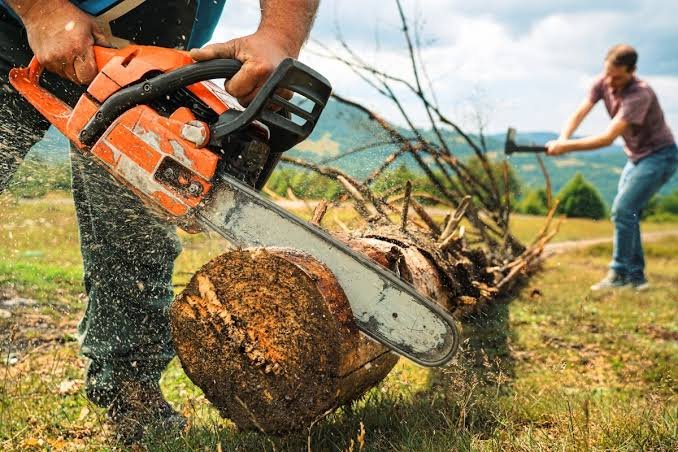
When properly maintained and used correctly, chainsaws are powerful and practical tools for tree care and removal, clearing dense brush, and cutting fallen branches into manageable pieces.
However, when handled or maintained incorrectly, chainsaws can become one of the most dangerous pieces of small equipment used by your team.
Here are some important points to keep in mind before, during, and after using a chainsaw.
Wear All Required Safety Equipment
Safety cannot be overstated! Chainsaws can cause serious injuries. If you are not paying close attention to what you are doing, you will want to make sure you are wearing all the appropriate safety equipment in case the chainsaw kicks back or the branch you are cutting moves unexpectedly.
Make sure chainsaw operators use all available personal protective equipment (PPE). This includes:
Helmets with a visor and hearing protection
Safety goggles
Protective jackets
Chainsaw gloves
Chainsaw chaps or protective trousers
Steel-toe or Kevlar-protected boots
Safety equipment should be inspected regularly according to how frequently it is used. Any damaged or worn PPE should be replaced immediately.
Perform a Daily Inspection and Cleaning
Make sure your chainsaw is ready for the work ahead. Daily inspections help protect operators while also improving equipment efficiency and extending its service life.
Here is a quick chainsaw inspection checklist to get you started:
Remove the clutch cover, guide bar, and chain, and clean away any accumulated debris.
Make sure the lubrication hole is not blocked.
Clean the guide bar groove and inspect it for wear. Make sure the bar is not bent.
Inspect the chain drive sprocket, air filter, and fuel lines for damage or other issues.
Reassemble the chainsaw.
Tighten or loosen the chain as necessary. The chain is properly adjusted when it can be lifted approximately ⅜ inch (about 1 cm) at the top center of the guide bar.
Check all fasteners, screws, and bolts to make sure they are securely tightened.
Inspect the machine for visible cracks or signs of wear.
Wipe down the exterior of the machine.
Check the chain catcher and replace it if it is damaged.
Always Use a Sharp Chain
Just like with lawn mowers, clean and sharp cutting components make a significant difference in how a chainsaw performs. When the chain becomes dull, the chainsaw has to work harder. Frequent use of a dull chain can reduce the service life of the chainsaw.
A worn chain can also compromise operator safety. Anyone who has accidentally run a chainsaw into the ground knows the difference between a sharp chain and a dull one. If you or someone on your team notices that extra force is needed to make a cut, it is time to sharpen or replace the chain.
Applying additional pressure during a cut can cause the operator to lose balance when the cut is completed. Nobody wants to be holding a running chainsaw while trying to regain their balance.
If the chainsaw becomes dull while working in the field, it is usually best to replace the chain with a sharp one. It is possible to sharpen a chain in the field if necessary, but the process can be time-consuming. Without the proper equipment to hold the chainsaw securely during sharpening, the result may also be less effective than sharpening it in a workshop.
When sharpening the chain, be sure to inspect both the cutting teeth and the depth gauges.
Sharpening the Cutting Teeth
The cutting teeth are the small, sharp blade-like components located along the chain.
To sharpen the cutting teeth:
Secure the chain so that it cannot move.
Engage the chain brake.
Position the appropriate file guide on the chain. The arrows on the guide should point toward the front of the chainsaw.
File every other cutting tooth using a smooth, even stroke at the correct angle. Apply slight upward pressure and file in one direction only.
Turn the chainsaw around and file the remaining cutting teeth in the same way.
Filing the Depth Gauges
Depth gauges are the small projections located next to each cutting tooth. They control how deeply the cutting teeth enter the material and how quickly material is removed during cutting.
As a general rule, depth gauges should be filed after every third chain sharpening.
To adjust the chainsaw's depth gauges:
Clean the chain of any grease or debris.
Secure the chain to prevent movement.
Place the appropriate depth-gauge guide over the chain so that it covers a cutting tooth.
File down the depth gauge until it is level with the guide.
Continue the process until all depth gauges are level with the guide.
Do Not Let the Chainsaw Run Completely Out of Fuel
When you pay close attention to your chainsaw, it will often give you signs that the fuel tank is almost empty. A change in the engine sound or fluctuations in engine speed can indicate that it is time to stop the chainsaw and refuel.
Running the chainsaw until it completely runs out of fuel can put unnecessary strain on the machine. Fast-moving components require proper lubrication and cooling. When these are not adequately maintained, premature wear can occur, potentially reducing the service life of the chainsaw.