- 08-27-2026
- 0
The future of farming – An introduction to automatic irrigation kits and automated drip irrigation
Agriculture in India has come a long way. Across many regions, farming has gradually evolved from being completely dependent on weather conditions to incorporating irrigation systems and modern digital technologies.Although there is still a long way to go, the significant transformations taking place today cannot be overlooked. These developments offer valuable benefits to farmers, home gardeners, and commercial growers alike.
What Is an Automatic Irrigation System?
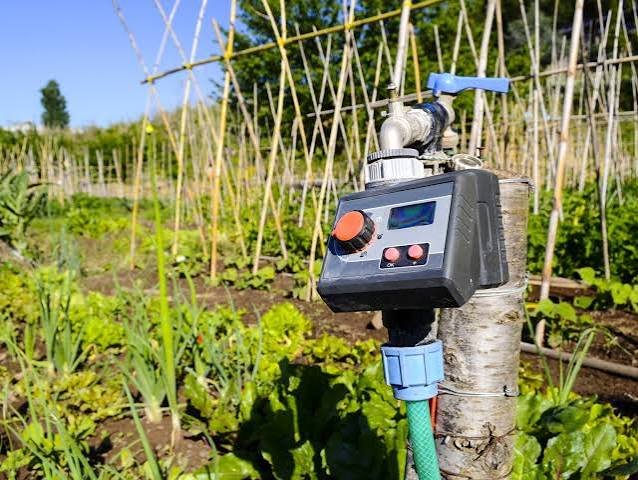
An automatic irrigation kit operates with little or no manual intervention, apart from basic monitoring. It uses sensors, timers, or computer-based controllers to automatically regulate the flow of water.
Almost any drip irrigation kit can be automated with the right equipment and components. An automatic watering system ensures that plants receive water accurately and at the right time, allowing farmers and gardeners to focus on other important tasks that require greater expertise and attention.
Global Automatic Irrigation System Market
As more farmers recognize the benefits of irrigation automation, the global market is expected to continue growing.
According to industry reports, the global irrigation automation and automated drip irrigation market is projected to grow from approximately USD 4 billion in 2022 to nearly USD 9 billion by 2027.
This represents more than a twofold increase in just five years, highlighting the growing importance of smart and automated irrigation technologies in modern agriculture.
Types of Automatic Irrigation Systems
Automatic irrigation systems have evolved significantly over the years and are now available in several different forms. The three main types of automated drip irrigation systems include:
1. Time-Based Irrigation System
A time-based system allows farmers to set the start time, irrigation duration, number of cycles, and maximum operating time. Depending on the controller model and manufacturer, irrigation can be programmed in minutes or seconds.
These systems are relatively simple to program and operate. However, they also have some limitations. For example, they may not provide real-time feedback about the system, and power interruptions can cause irrigation cycles to be partially or completely skipped.
2. Volume-Based Irrigation System
A volume-based system allows farmers to set the start time, required amount of water in litres or cubic metres, and the number of irrigation cycles per day.
This type of system provides greater operational flexibility, allowing irrigation to be controlled based on either time or water volume. It can also provide accurate water quantity and flow calculations and detect flow deviations, including no flow, low flow, or excessive flow.
However, volume-based systems are generally more expensive than time-based systems. They may also require additional components such as water meters, sensors, and flow meters.
3. Sensor-Based Irrigation System
A sensor-based irrigation system operates according to information received from various sensors. These may include soil moisture sensors, tensiometers, solar radiation sensors, vapour pressure deficit sensors, and evapotranspiration (ET) measurements.
This technology allows irrigation to take place precisely when water is required, helping farmers achieve significant savings in water and other resources.
However, sensor-based systems are generally the most expensive type of automated irrigation system. They require regular sensor maintenance, and the number of sensors needed depends on the size of the land.
A sensor failure can also affect the performance of the irrigation system.
Benefits of an Automatic Drip Irrigation System
For many years, farmers have faced challenges related to irrigation accuracy, efficiency, water conservation, and increasing labour costs.
An automatic drip irrigation system can effectively address many of these challenges. A fully automated drip irrigation system minimizes manual intervention, improves irrigation accuracy, and provides several important benefits.
Water Saving
Plants receive only the amount of water they need and exactly when they need it. This helps reduce water waste and prevents delays that can occur when irrigation systems are operated manually.
By delivering water directly and precisely to the plants' root zones, drip irrigation can also improve overall water-use efficiency.
More Uniform Crop Growth
Automated drip irrigation systems can be programmed to deliver precise amounts of water according to the requirements of crops at different stages of growth.
As a result, plants are less likely to receive too much or too little water. Consistent and uniform water distribution can contribute to more even and healthier crop growth.
Significant Cost Savings
Automating a drip irrigation system can reduce the need for manual labour to operate the irrigation system.
In addition, modern irrigation controllers can allow farmers to monitor and control irrigation remotely using a smartphone.
These features can help reduce the time, labour, and operating costs associated with manually controlled irrigation systems.
Conclusion
Automatic irrigation is becoming an increasingly important part of modern agriculture. By combining drip irrigation with timers, sensors, controllers, and smart technologies, farmers can improve irrigation precision, save water, reduce labour requirements, and promote more uniform crop growth.
As irrigation technology continues to develop, automated irrigation systems are likely to play an even greater role in creating efficient and sustainable agricultural practices.